
Epoxy Garage Flooring
in Ottumwa, IA
A sealed, hardworking floor that stands up to tires, tools, and whatever the day brings in.
Your Garage Should Feel Like Part of Your Home
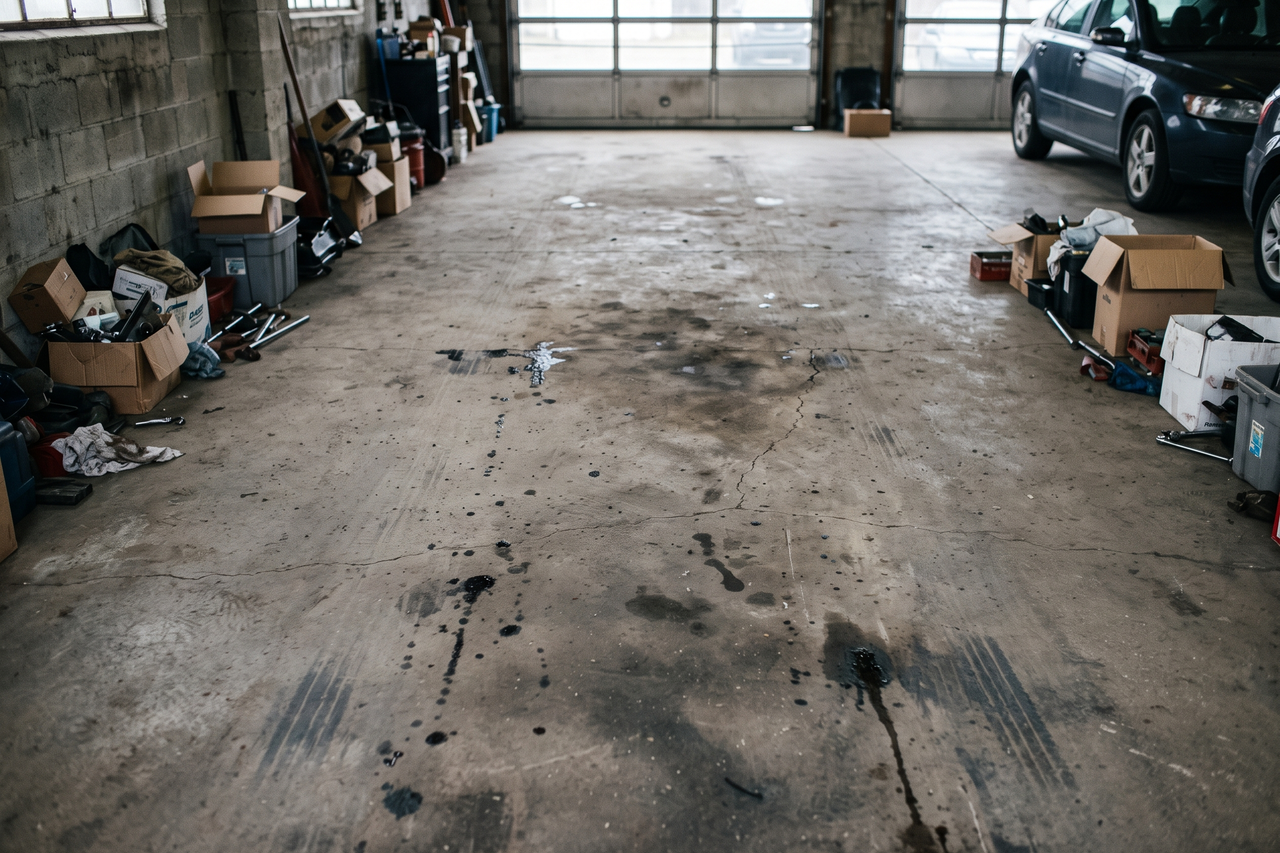
For most households, the garage door is the one people actually use to come and go. Yet the floor that gets walked on twice a day is often the same stained, dusty slab it has always been — absorbing oil drips, trapping grit, and quietly making the whole space feel unfinished.
Bare concrete is porous by nature. Spills sink in rather than wiping up, and a layer of fine dust works its way onto anything stored nearby. Over time the floor becomes harder to ignore and harder to keep clean.
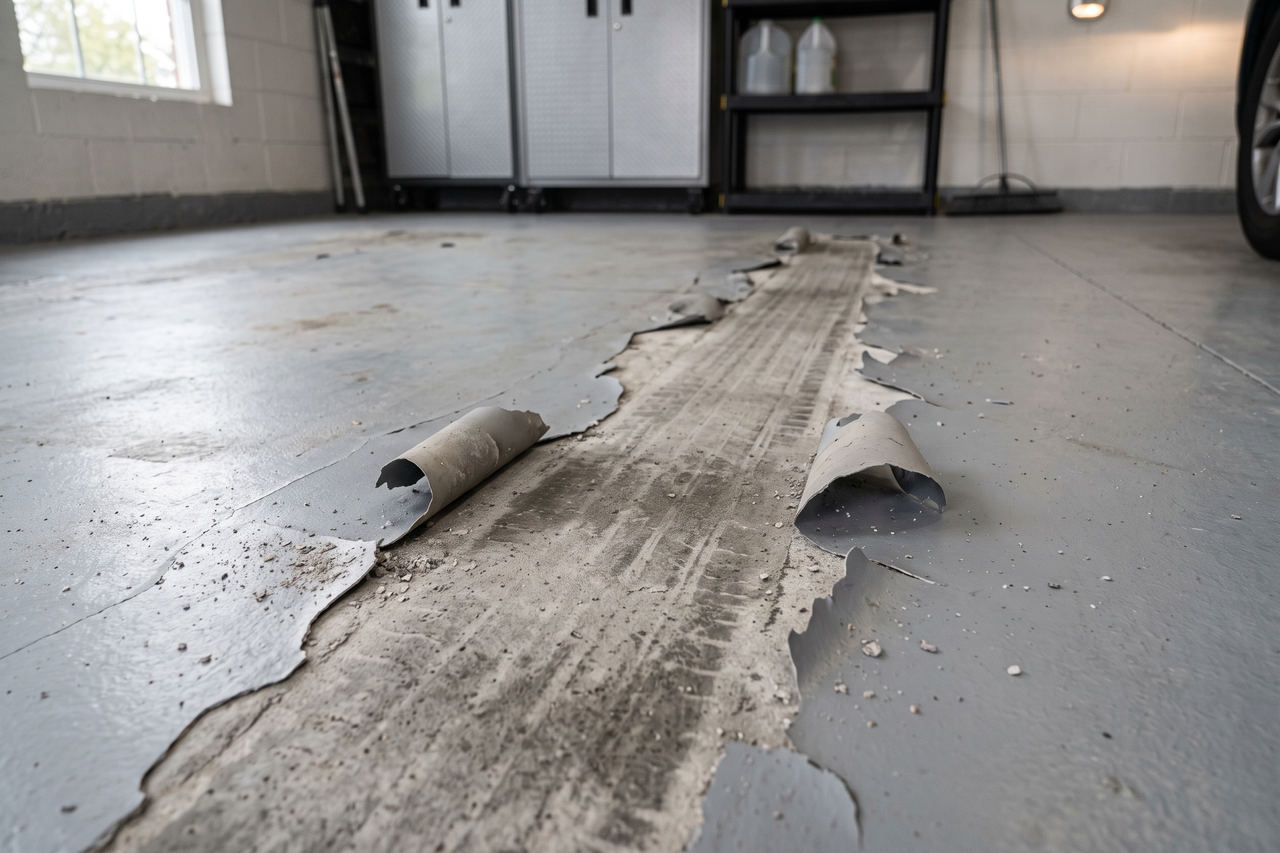
Off-the-shelf paints and roll-on kits seem like a simple solution, but they’re often applied without the grinding and repair that help a coating bond to concrete. Hot tires, moisture and daily traffic can expose that weakness, and a floor that looked fine at first may start to peel or lift.
You Don't Have to Know Which Garage Floor Coating Is Right
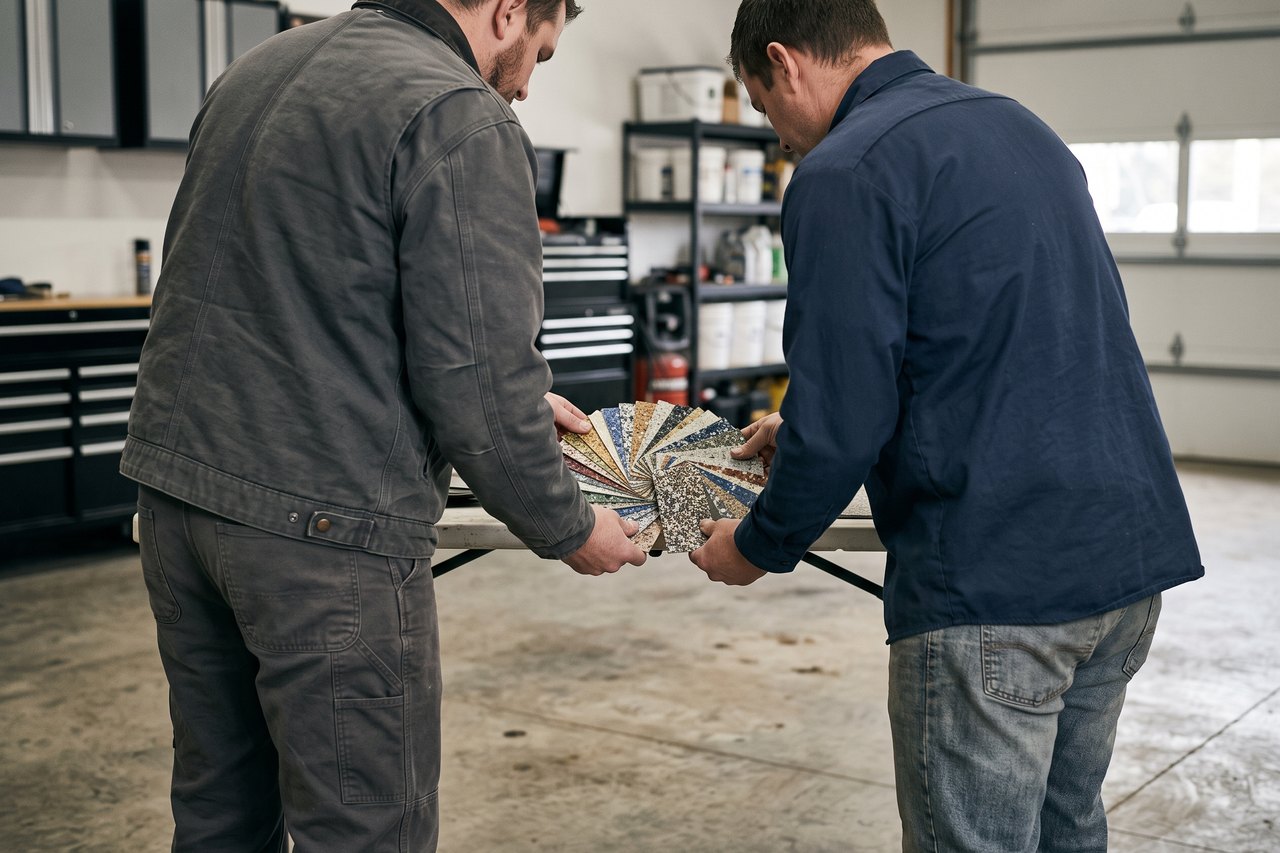
Epoxy, polyaspartic, solid color, decorative flake, metallic — the options are real, and the right answer depends on details specific to your floor, not a general recommendation from a product label. How the garage is used, how much direct sunlight reaches the slab, whether there are cracks or old coatings to deal with, and what finish you want all factor into the decision.
The process starts with the concrete itself. The flooring contractor examines the slab, checks for moisture where conditions call for it, and looks at anything already on the surface before recommending a system and finish that fit your garage and your goals. Decorative flake blends add texture and break up everyday scuffs. Metallic epoxy produces a high-gloss, distinctive look for garages that double as display or hobby spaces.
Your Garage. Your Style. Three Simple Steps.
A straightforward process from the first conversation to the day you park on it.
01
Show Us Your Garage
Describe the space, how you use it, and what the floor looks like today so we can match you with the right options.
02
Choose Your Floor
The flooring contractor evaluates the slab, walks through coating systems and finish choices, and puts together a quote based on your actual floor.
03
Come Home to a Finished Garage
The contractor prepares the concrete properly, applies the coating, and lets you know when the floor is ready for vehicles and everyday use.
Ready to See What Your Garage Could Become?
Most people are surprised at the difference a properly coated floor makes — not just in how the garage looks, but in how the whole space feels and functions. Tell us about your garage and what you’d like to change, and we’ll work to connect you with an independent flooring contractor who can walk you through options and, if the project is a fit, prepare a customized quote.
The Wrong Garage Floor Can Cost You Twice
When budget coatings and do-it-yourself kits fail, inadequate preparation is often part of the problem, alongside moisture, product choice and application conditions. Without grinding to the right surface profile and addressing moisture and repairs, even a decent product has a weaker foundation, and problems like hot-tire pickup, bubbling or flaking become more likely.
Once a coating starts failing, the path forward is removal first. The failed material has to be ground off the slab before anything new can go down — which means paying to address the floor twice.
Choosing a system matched to your garage and making sure the concrete is prepared the right way the first time is often the more economical decision over the life of the floor. It reduces the odds of an unplanned redo later.
A Garage You're Proud to Come Home To
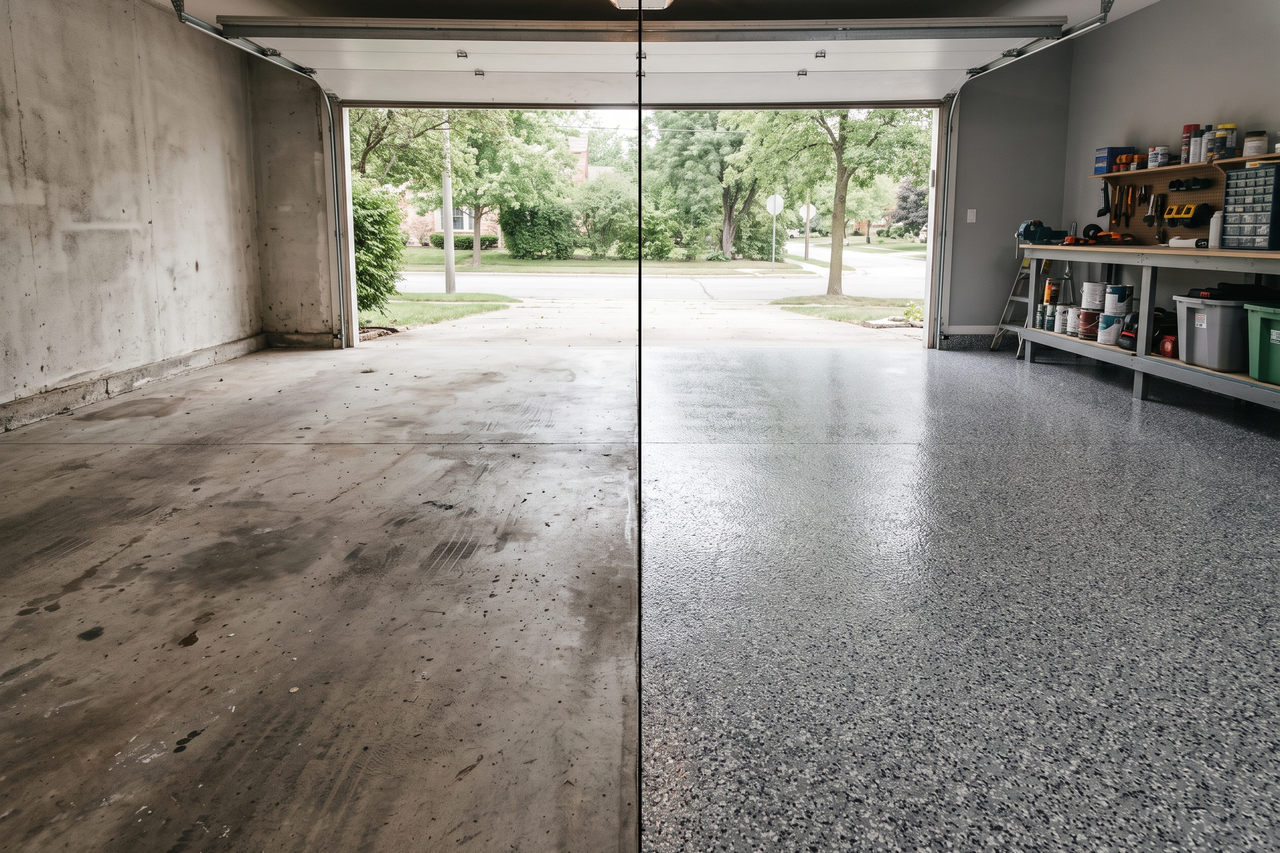
A sealed garage floor changes the whole character of the space. Oil, salt, and road grime stay on the surface instead of soaking in, so a damp mop handles what would otherwise require serious scrubbing.
The garage becomes more usable — cleaner for a workshop, brighter for storage, more comfortable for a home gym, and simply a more pleasant place to pull into at the end of the day. Light reflects off the sealed surface rather than disappearing into gray concrete.
Whether you park there every night, run a side project out of the garage, or just want to stop making excuses when guests walk through, a properly coated floor makes the whole space feel intentional.
What Does Garage Floor Coating Cost?
Several things shape the price: how big the garage is, what state the concrete is in, how much repair and grinding it needs, which coating system you choose and the look you want. A solid color, a decorative flake broadcast and a metallic finish each use different materials and take different amounts of labor.
The most reliable number comes from looking at your specific floor. A customized quote is based on the contractor’s evaluation of the concrete and your goals, not a square-footage estimate from a chart.
Common Garage Floor Questions
Will a coated garage floor hold up under hot tires?
Hot-tire pickup is a common problem with garage floor paint and DIY kits. Professional coating systems over well-prepared concrete are formulated to hold up to it much better. The coating system selected and the quality of the surface preparation both play a role, and the contractor recommends a system suited to your parking conditions.
Can a garage floor with cracks or oil stains be coated?
In most cases, yes. Cracks and surface damage are typically repaired as part of the preparation process, and oil-saturated areas are cleaned and treated before the coating goes down. Concrete that is heavily contaminated may need closer evaluation first, and the contractor will be straightforward about what the slab can support.
Will the finished floor be slippery?
High-gloss finishes can become slick when wet. Decorative flake broadcast adds texture that helps with traction, and anti-slip additives can be mixed into the topcoat in areas where wet conditions are common, such as near a garage door or a floor drain.
How soon can I use the garage after the coating is applied?
That depends on the coating system and the conditions during curing. Some systems allow foot traffic sooner, while vehicles and heavy loads take longer. Your installer should explain the expected schedule before work begins so you can plan accordingly.