
Epoxy Basement Flooring
in Ottumwa, IA
Turn a cold, dusty basement slab into a clean, sealed floor that earns its square footage.
Your Basement Shouldn't Feel Unfinished From the Floor Up
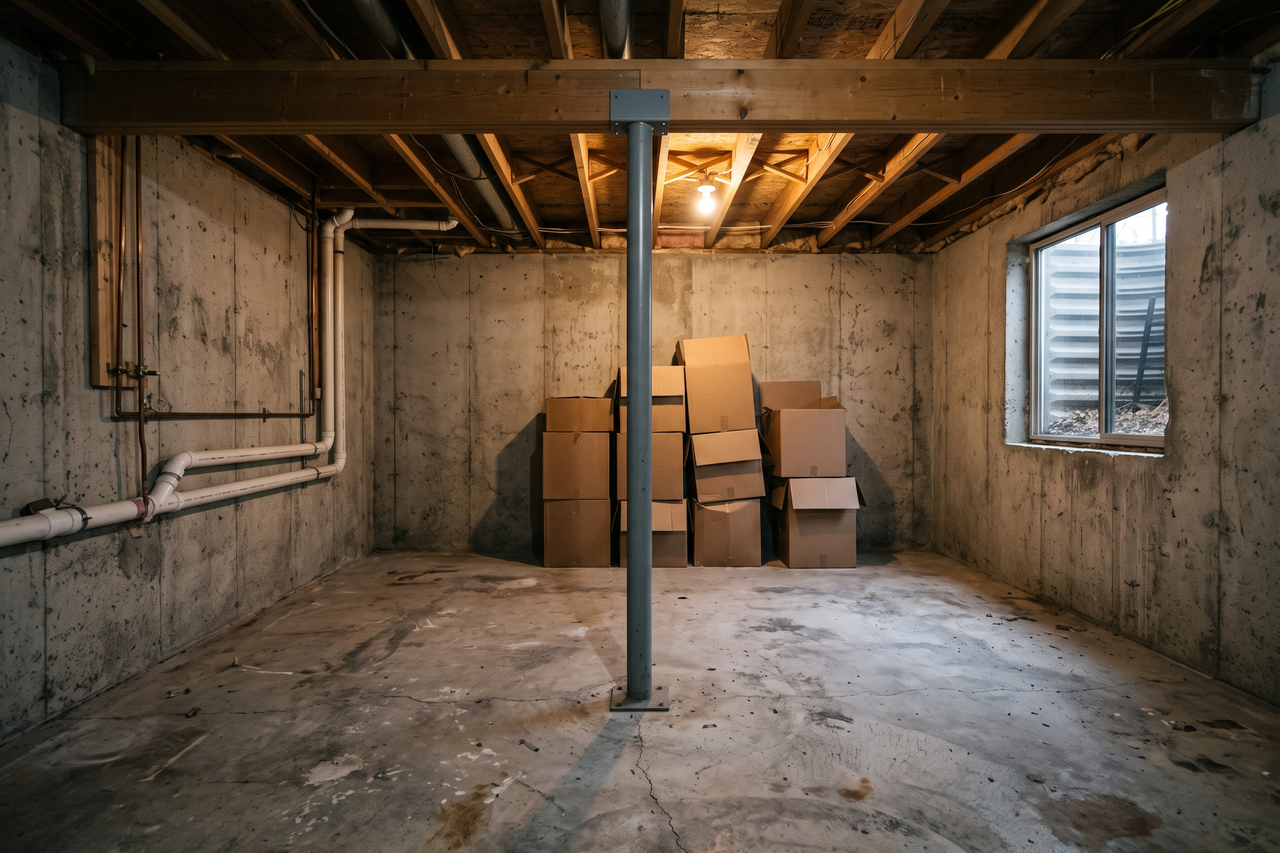
Basements hold real potential — room for a gym, a family space, a workshop, organized storage — but that potential is hard to act on when the floor looks and feels like unfinished construction. A bare concrete slab is cold underfoot, sheds a fine dust that settles on shelving and equipment, and soaks up moisture and spills rather than resisting them.
The floor is also the first thing anyone notices walking down the stairs. When it looks unfinished, the whole space does, no matter what else has been done to the walls or ceiling.
Some floor coverings that work well above grade are a poor fit below it. Carpet and hardwood can struggle with the moisture conditions typical of a concrete basement slab. A coating system designed for concrete gives you a surface that belongs there.
The Right Basement Floor Starts With the Concrete Underneath
Basement slabs come with more variables than most people expect. Moisture movement through or below the slab, existing paint or adhesive residue, previous patch repairs, and hairline cracks all affect what a coating can do and how the process should start.
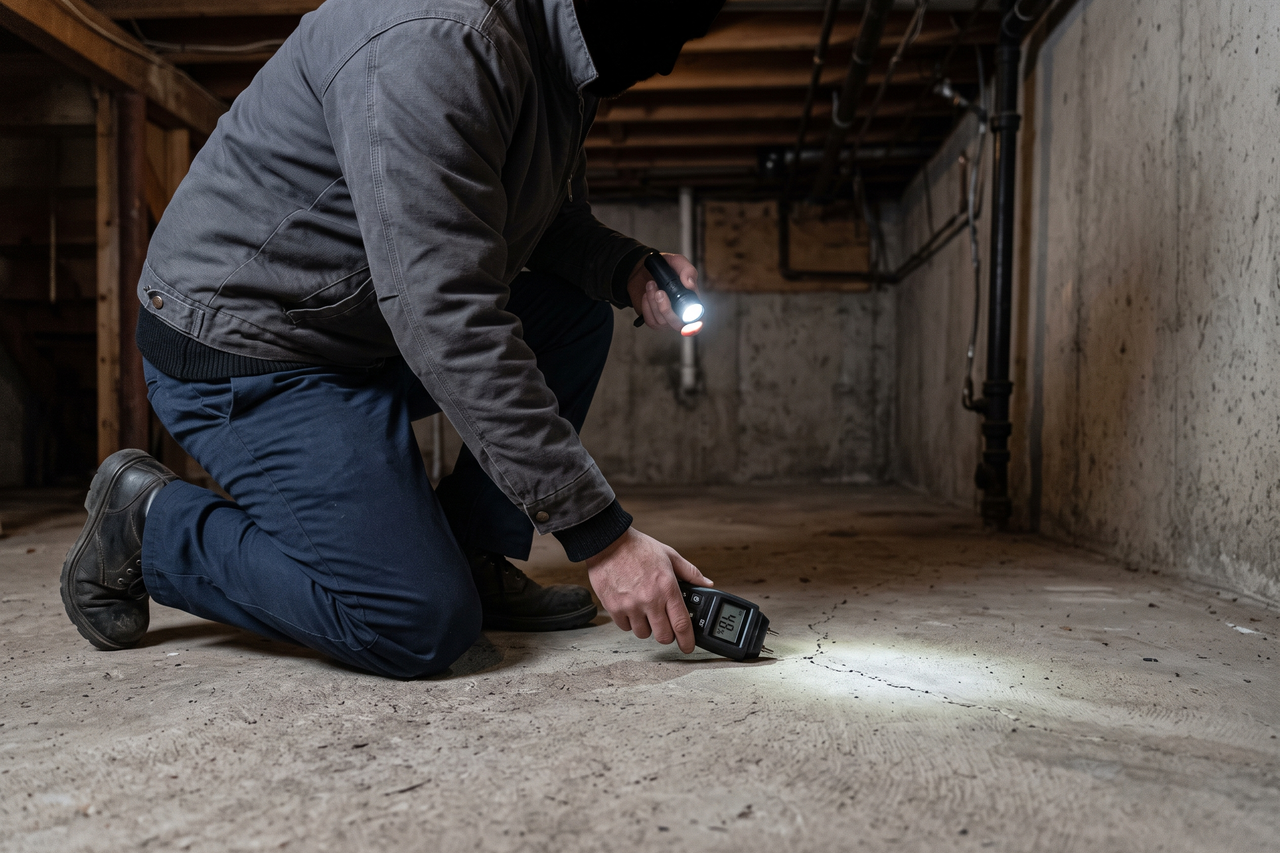
The flooring contractor evaluates the concrete first, including moisture testing where conditions call for it, before recommending a system that suits what’s actually under your basement. A system installed without that evaluation may look fine initially, only to start failing once moisture works against the bond from below.
Once the concrete is understood, the finish is up to you. Solid colors keep things clean and simple. A decorative flake blend adds texture and hides everyday scuffs. Metallic epoxy can give a basement entertainment or hobby space a look that goes well beyond a painted floor.
A Better Basement Floor Is Easier Than You Think
Getting started is simpler than most homeowners expect.
01
Tell Us About Your Basement
Share how you plan to use the space, what the floor looks like now, and anything you know about past moisture or existing coatings.
02
Choose the Right Floor
The flooring contractor evaluates the slab, discusses what the concrete can support, and recommends a coating system and finish based on your conditions and goals.
03
Transform the Space
The contractor prepares the concrete correctly, installs the coating, and hands back a basement floor that’s ready for real use — not just for looking at.
Ready to Make Your Basement Feel Finished?
If you’ve been putting off the basement floor because you weren’t sure where to start, a conversation is the right first step. Tell us about the space and what you’d like it to become, and we’ll work to connect you with an independent flooring contractor who can evaluate the slab and, if the project is a fit, prepare a clear estimate.
Don't Turn Your Basement Floor Into a Project You Have to Do Twice
Basement coatings that fail often fail for a predictable reason: something in the preparation step was skipped or underestimated. Old paint and sealer left on the surface, moisture that was never tested, and concrete that wasn’t ground to the right profile can all undermine a coating’s bond before foot traffic ever touches it.
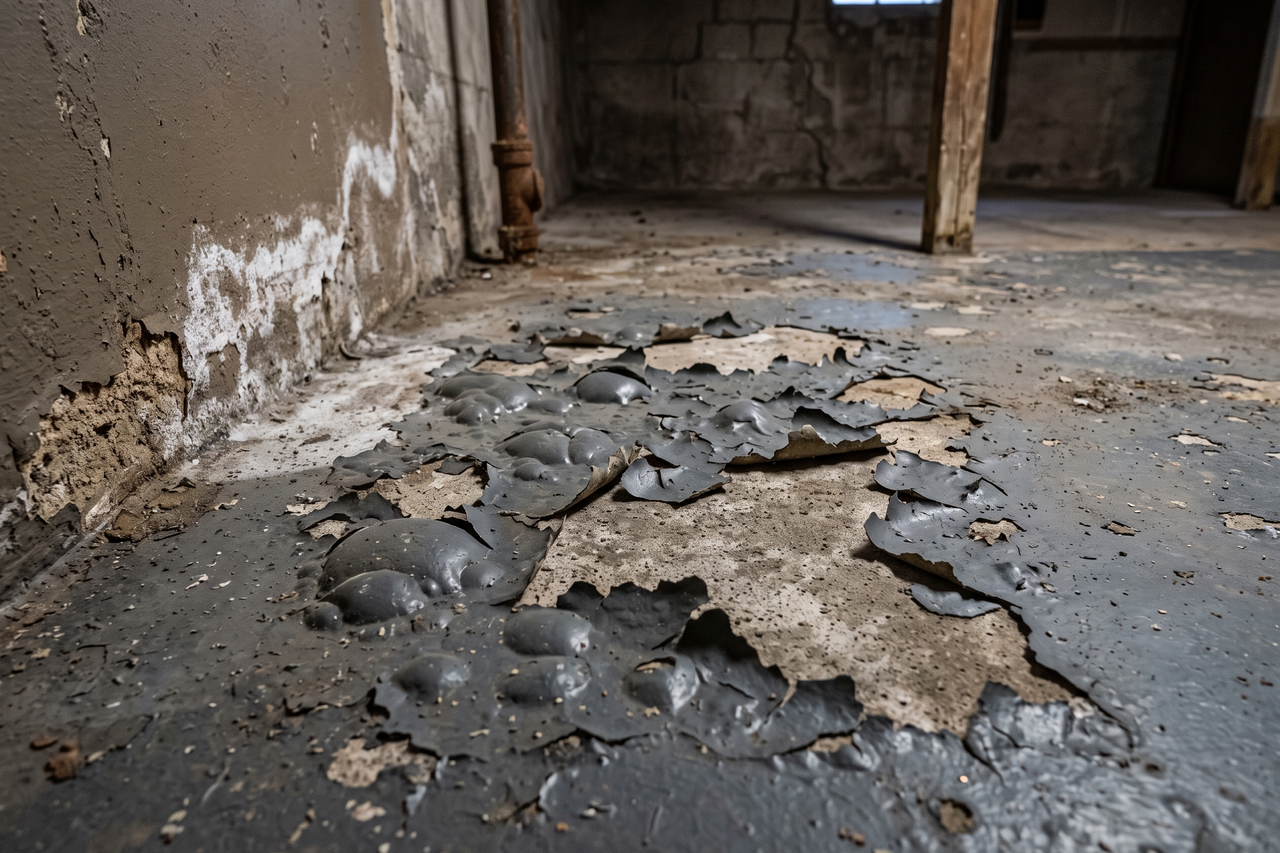
Moisture is one of the most common complications below grade. If it’s present and not accounted for before coating, it can push upward against the new surface from underneath. The result is bubbling, lifting, or peeling — and a floor that has to be stripped back and redone.
Proper preparation is slower and costs more upfront than rolling on a coating over a swept slab. But it gives the new surface a significantly better foundation and reduces the likelihood of an expensive repeat project down the road.
A Floor That Changes How Your Basement Feels
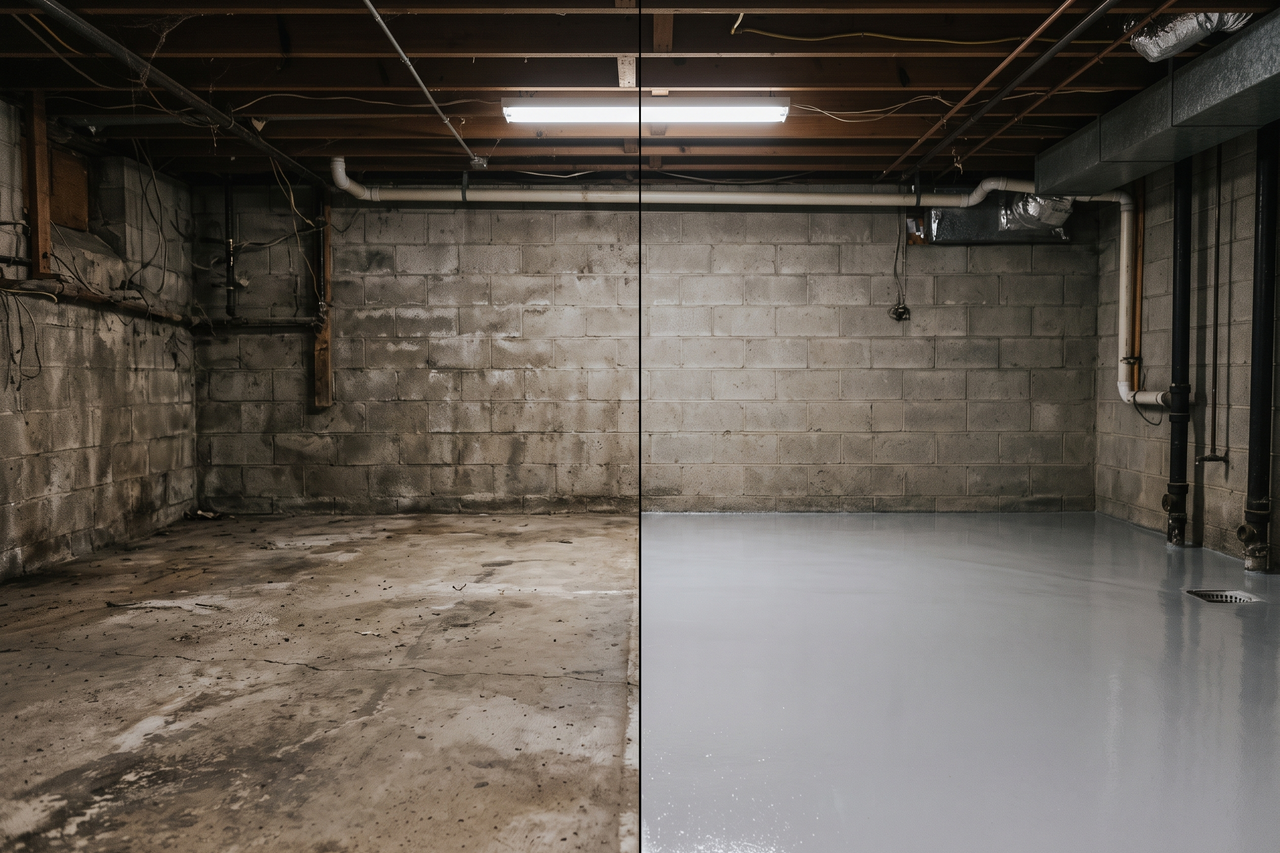
A sealed basement floor reflects light instead of absorbing it, which makes the room feel noticeably brighter and less closed in. Dust stops shedding from the surface, and spills wipe up rather than soaking into porous concrete.
That shift in how the floor performs changes how the space gets used. A storage area you avoided because it always looked damp and dingy becomes somewhere you can actually find what you’re looking for. A room you were vaguely planning to finish becomes a gym or a family space you’re glad to spend time in.
The basement floor often has more impact on how a space feels than the amount of square footage suggests — and the right coating makes it clear that the room is finished.
What Does Epoxy Basement Flooring Cost?
Basement floor pricing depends on the square footage of the space, what the concrete evaluation reveals, whether old coatings or adhesive residue need to be removed, any crack or surface repairs required, moisture testing and any related prep, and the coating system and finish you select.
Because every basement slab is different, the most useful estimate comes from seeing yours. A clear estimate is based on the contractor’s evaluation of the concrete and how you plan to use the room.
Common Questions About Epoxy Basement Flooring
Can epoxy be installed on a basement floor that has moisture?
It depends on the amount and source of moisture, which is exactly why evaluation matters before any coating is chosen. Some moisture conditions can be addressed with the right primer or barrier system; others need to be resolved at the source before coating makes sense. A flooring contractor assesses the slab and explains what the concrete can support.
Will an epoxy coating stop water from coming into my basement?
No. A floor coating seals the surface of the concrete but is not a waterproofing system. Active leaks, drainage problems, or persistent water intrusion need to be addressed before a coating is applied. Applying a coating over an unresolved water problem typically leads to early failure.
Does old paint or sealer on a basement floor have to be removed?
In most cases, yes. For a new coating to bond properly, it needs direct contact with clean, profiled concrete. The contractor evaluates what’s currently on the surface and determines what preparation is needed before anything new can go down.
Is a coated basement floor hard or cold underfoot?
The coating is applied over the concrete slab, so the surface hardness and temperature characteristics are similar to the concrete beneath it. Many homeowners add area rugs or interlocking mats in seating or exercise areas. What changes is that the floor is sealed, clean, and far more pleasant than bare concrete.
What finish options are available for a basement floor?
Common options include solid colors for a clean, straightforward look; decorative flake blends that add texture and visual interest; and metallic epoxy for spaces where appearance is a priority. The right finish depends on how you plan to use the room and the look you’re after.